What Is Generative Engine Optimization (GEO)? The Complete Guide for AI Search
Introduction
Search is entering a new era. For more than twenty years, online visibility has been driven by search engines such as Google and Bing. Businesses optimized websites using Search Engine Optimization (SEO) so they could rank higher on search results pages and attract organic traffic.
However, the way people search for information is changing rapidly. Instead of clicking through multiple websites, users increasingly ask questions directly to artificial intelligence tools such as ChatGPT, Google Gemini, Claude, and Perplexity. These tools do not simply show links. They generate a direct answer by analyzing and summarizing information from multiple sources.
This shift has introduced a new concept called Generative Engine Optimization (GEO).
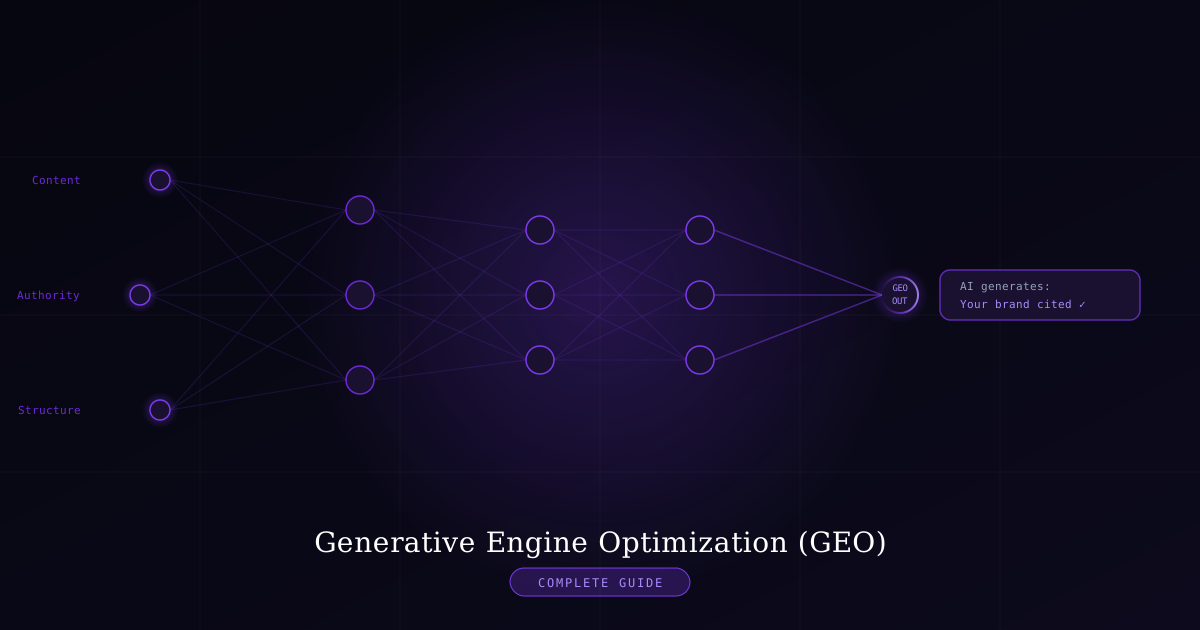
Generative Engine Optimization focuses on helping content appear inside the answers generated by AI systems. Instead of optimizing only for rankings on search engine results pages, GEO aims to ensure that your brand, content, or expertise is included in AI-generated responses.
Understanding GEO is becoming essential because generative AI is rapidly transforming how people access information online.
What Is Generative Engine Optimization?
Generative Engine Optimization (GEO) is the process of optimizing digital content so that it appears in responses generated by AI-powered search systems such as ChatGPT, Google AI Overviews, and other large language model tools.
Unlike traditional search engines that display a list of ranked links, generative engines create a single response by synthesizing information from different sources.
Because of this, the goal of GEO is not simply to rank a webpage but to ensure that the information within the content becomes part of the AI-generated answer.
For example, if someone asks an AI assistant:
"What is generative engine optimization?"
The system will analyze trusted sources across the web, extract relevant insights, and produce a summarized explanation. The sources it selects become part of the generated answer.
This means that businesses must optimize their content not only for search engines but also for AI systems that interpret and summarize information.
Why Generative Engine Optimization Matters
Generative AI is reshaping how people discover information online.
Instead of manually researching multiple sources, users can now receive a clear and conversational answer from an AI assistant within seconds. This dramatically changes the search experience.
According to industry research, Google expected its AI Overviews feature to reach more than one billion users globally as AI becomes integrated into search experiences.
At the same time, platforms such as ChatGPT and Perplexity are being used for everything from product research to professional advice.
This shift creates a new challenge for businesses.
In traditional search, users had to click through a website to read the information. With generative AI, the answer may appear directly in the AI interface, which means users may never visit the source website.
For brands, this means visibility is increasingly determined by whether AI systems include their content when generating answers.
Companies that understand GEO early can ensure their expertise is represented accurately in these AI responses.
How Generative Engines Work
To understand GEO, it helps to understand how generative search systems operate.
Most AI-powered search tools follow a similar process when generating answers.
1. User asks a question
Users typically ask questions using natural language. These queries are often longer and more conversational than traditional keyword searches.
2. The system retrieves information
The AI system retrieves information from multiple sources across the internet. These sources may include:
- Blog articles
- Research papers
- Knowledge bases
- Product documentation
- Websites and databases
3. Sources are evaluated
The AI evaluates sources based on several factors:
- Credibility
- Relevance
- Authority
- Freshness of information
4. The response is generated
Finally, the AI synthesizes the information into a single response that explains the topic clearly.
Because generative engines combine multiple sources, content that is structured clearly and provides direct answers has a higher chance of being selected.
Generative Engine Optimization vs SEO
Although GEO builds on the foundation of SEO, the two strategies focus on different outcomes.
Aspect SEO GEO Goal Rank in search results Appear in AI-generated answers Output List of links AI-generated response Optimization Focus Keywords, backlinks, technical SEO Clear answers, context, authority Discovery Users choose a link AI synthesizes information Metrics Rankings and traffic AI citations and brand mentions
Traditional SEO is still important because AI systems often rely on high-quality web sources that already rank well. However, GEO requires additional optimization strategies focused on machine readability and content clarity.
Key Principles of Generative Engine Optimization
Content that performs well in generative AI responses usually follows several key principles.
Clear and Direct Explanations
AI systems prefer content that answers questions directly and clearly. Articles that provide concise explanations early in the content are easier for AI systems to extract.
Structured Content
Well-organized content improves machine readability. Use elements such as:
- Headings
- Bullet points
- Tables
- Short paragraphs
Strong Authority Signals
AI systems tend to favor trusted sources. Authority signals include:
- Expert authorship
- Credible citations
- Original insights
- Consistent topical coverage
Up-to-Date Information
Generative engines prioritize content that is accurate and current. Regular updates improve the likelihood of appearing in AI responses.
Semantic Depth
Content that explores a topic thoroughly and uses natural language tends to perform better in AI search environments.
How to Optimize Content for Generative Engines
Businesses can improve their chances of appearing in AI-generated answers by following several GEO best practices.
Answer Questions Directly
Start sections with a clear explanation or definition. AI systems often extract the first concise answer they find.
Use Question-Based Headings
Headings that mirror real user questions help AI models understand the intent of the content.
Create Comprehensive Guides
Long-form, detailed content provides explanations that AI systems can reference.
Establish Topical Authority
Publishing multiple articles on related topics strengthens credibility signals.
Use Structured Formatting
Lists, tables, and clear formatting make information easier for AI systems to interpret.
Maintain Factual Accuracy
Reliable, verifiable information increases the chances that AI systems will use your content.
Measuring GEO Success
Traditional SEO metrics such as rankings and click-through rates do not fully capture visibility in generative AI environments.
Instead, GEO success is often measured through additional indicators.
AI Citations
How frequently AI systems reference your content or brand when answering questions.
AI Visibility
How often your information appears in AI-generated responses.
Brand Mentions in AI Responses
Whether AI systems mention your company or product when explaining relevant topics.
Influence on Customer Research
Whether customers encounter your brand while using AI assistants during their research process.
As AI search evolves, new analytics tools are emerging to track these signals.
The Future of Generative Search
Generative AI is expected to become a core part of how people access information online.
Large language models can interpret complex questions, synthesize knowledge, and deliver conversational answers that feel more intuitive than traditional search results.
Researchers describe GEO as a new approach to content visibility that focuses on influencing how generative AI systems retrieve and present information.
However, this does not mean traditional search will disappear. Instead, the future will likely combine search engines and generative AI.
Users may still visit websites for deeper insights, while AI assistants guide the early stages of information discovery.
For businesses, the most effective strategy will involve combining SEO and GEO to maintain visibility across both traditional and AI-driven search environments.
Key Takeaways
Generative Engine Optimization is becoming an essential strategy as AI-powered search continues to grow.
The goal of GEO is not only to rank on search engines but also to ensure that your content appears in AI-generated answers.
Businesses that focus on:
- Clear explanations
- Structured content
- Authoritative information
- Updated insights
will have a greater chance of being referenced by generative AI systems.
As AI continues to reshape digital discovery, organizations that adopt GEO early will gain a significant advantage in online visibility.
Ready to see how visible your brand is in AI search? Get a free visibility audit from our team.