What Is Answer Engine Optimization (AEO)? The Complete Guide for AI Search
Introduction
Search is evolving faster than at any point in the past two decades. For years, businesses focused on optimizing websites so they could rank higher on search engine results pages. This strategy, known as Search Engine Optimization (SEO), helped brands attract traffic by appearing at the top of Google search results.
However, the way people search for information is changing. Instead of browsing through multiple websites, users increasingly ask questions directly to AI tools such as ChatGPT, Perplexity, Claude, and Google's AI-powered search results. These systems do not simply show links. Instead, they generate a direct answer by synthesizing information from multiple sources.
This shift has introduced a new concept in digital marketing called Answer Engine Optimization (AEO).
Answer Engine Optimization focuses on structuring content so that AI systems can easily extract and reference it when generating answers to user questions. Instead of only ranking in search results, the goal is to become a trusted source for AI-generated responses.
According to Statista, more than 1 billion people now use AI assistants worldwide, and that number continues to grow rapidly. At the same time, Google reports that its AI search experiences reach hundreds of millions of users globally.
For businesses and publishers, this means visibility in the future will depend not only on traditional SEO but also on whether AI systems recognize and use their content when answering questions.
What Is Answer Engine Optimization (AEO)?
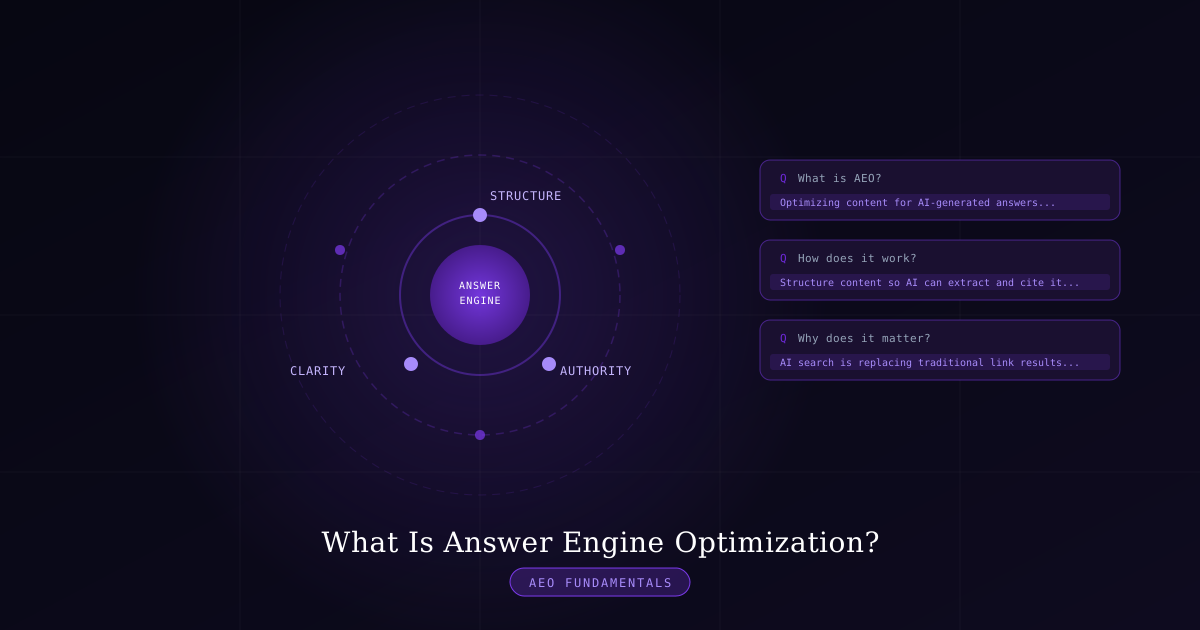
Answer Engine Optimization (AEO) is the process of optimizing digital content so AI systems can easily understand, extract, and cite it when responding to user queries.
Unlike traditional SEO, which focuses primarily on improving rankings in search results, AEO focuses on ensuring that your content becomes part of the answer generated by AI platforms.
For example, when someone asks an AI assistant:
"What is Answer Engine Optimization?"
The AI system scans trusted sources across the internet and generates a summarized response. The sources it chooses are typically clear, authoritative, and structured in a way that makes them easy for machines to interpret.
In simple terms:
- SEO helps people discover your website
- AEO helps AI systems use your information when generating answers
Both strategies are important and often work together.
Why Answer Engine Optimization Matters
AI-powered search is transforming how users discover information online. Instead of clicking multiple search results, users increasingly expect instant answers.
According to Gartner, traditional search engine volume could decline by 25 percent by 2026 as users rely more on AI assistants and conversational interfaces.
This change creates both challenges and opportunities.
Traditional Search
Users scan a list of links and choose which website to open.
AI Search
AI systems evaluate multiple sources and deliver a summarized response.
This means brands whose content is used by AI systems gain visibility even if users never click through to their websites.
For companies that invest in AEO strategies early, this presents a major competitive advantage.
How Answer Engines Work
Most AI-powered search systems follow a similar process when generating answers.
1. A User Asks a Question
Users typically ask questions in natural language, such as:
- What is Answer Engine Optimization?
- How does AI search work?
- What is the difference between SEO and AEO?
2. The System Retrieves Information
The AI searches multiple sources across the internet, including:
- Blog articles
- Research reports
- Documentation pages
- Knowledge bases
3. Sources Are Evaluated
The AI evaluates sources based on several factors:
- Authority and credibility
- Clarity of explanations
- Recency of information
- Relevance to the query
4. The AI Generates a Response
Finally, the system synthesizes the information and generates a clear answer. In many cases, it also cites the sources used.
Because of this process, content that is clear, structured, and authoritative has a higher chance of being selected.
SEO vs AEO: Understanding the Difference
Factor SEO AEO Primary Goal Rank higher in search results Become a source in AI answers Output List of links Direct answer or summary Optimization Focus Keywords, backlinks, technical SEO Clear explanations and structured answers Metrics Rankings, traffic, CTR AI citations, AI visibility Content Style Keyword optimized pages Question-based structured content
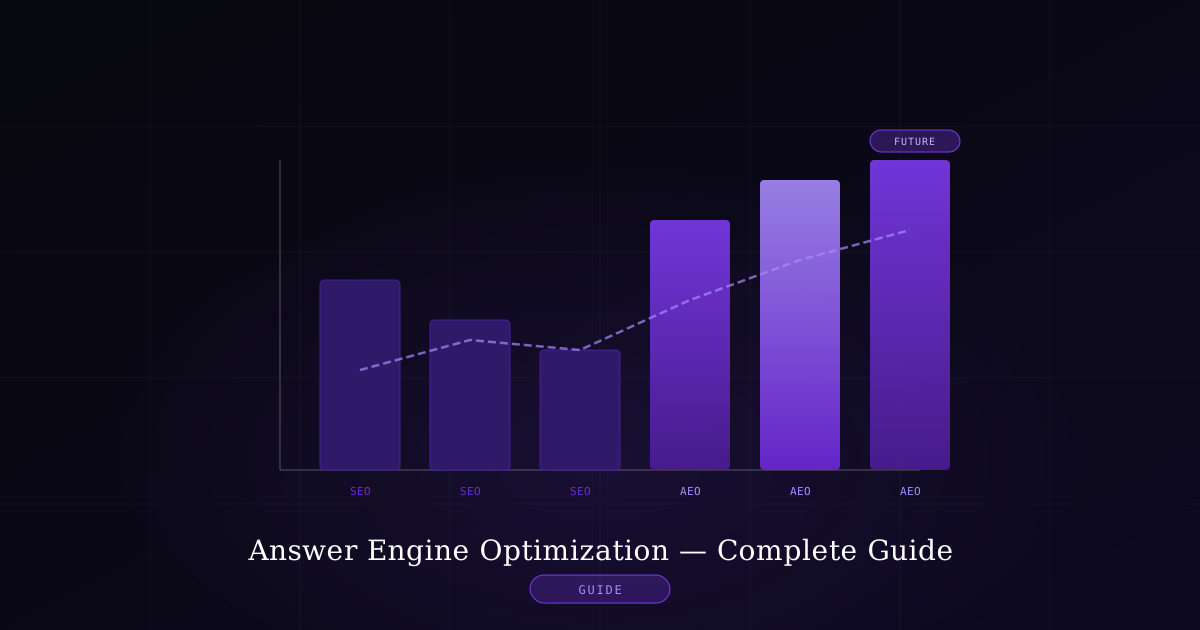
SEO remains important because many AI systems still rely on search engines to retrieve information. However, AEO adds an additional layer focused on answer extraction.
Key Elements of Answer Engine Optimization
Successful AEO strategies typically include several key components.
Clear and Direct Answers
Content should answer the main question early in the section. AI systems often extract definitions or concise explanations.
Question-Based Headings
Using headings that mirror common search queries helps AI systems understand the context of the content.
Examples:
- What is AEO?
- How does Answer Engine Optimization work?
- Why is AEO important?
Structured Formatting
Well-structured content improves machine readability.
Helpful formats include:
- Bullet lists
- Tables
- Short paragraphs
- Definitions
- FAQ sections
Authoritative Content
AI systems prioritize trusted sources. Authority signals include:
- Expert insights
- Research or statistics
- Author credentials
- Credible references
Updated Information
Fresh and regularly updated content is more likely to be selected by both search engines and AI systems.
How to Optimize Content for Answer Engine Optimization
Businesses can increase their chances of appearing in AI-generated answers by following several strategies.
Start With a Clear Definition
Provide a concise explanation early in the article.
Example:
Answer Engine Optimization is the practice of structuring digital content so AI systems can extract and reference it when generating answers to user queries.
Structure Content Around Questions
Use headings that reflect real user questions.
Write Clearly and Simply
Avoid overly complex language. Short, direct explanations are easier for both readers and machines to understand.
Build Topical Authority
Publishing multiple articles around related topics helps establish expertise.
For example:
- AI search optimization
- LLM visibility
- AI citation strategies
- AI-driven search analytics
Use Structured Data
Schema markup helps machines interpret webpage content more effectively.
Common schema types include:
- FAQ schema
- Article schema
- How-to schema
- Organization schema
Metrics for Measuring AEO Success
Traditional SEO metrics do not fully capture visibility in AI-driven search environments.
Some useful metrics include:
AI Citations
How often AI responses reference your content or brand.
AI Visibility
How frequently your content appears in AI-generated answers.
Brand Mentions in AI Responses
Whether AI systems refer to your company when explaining a topic.
Assisted Conversions
Traffic or leads that originate from AI-assisted discovery.
As AI search continues to evolve, new analytics tools are emerging to track these signals.
The Future of Search and AI
AI-powered search is still developing, but its growth is accelerating rapidly.
Major technology companies are investing billions of dollars into generative AI systems that can summarize complex topics and deliver conversational answers.
According to McKinsey, generative AI could contribute up to $4.4 trillion annually to the global economy, largely by improving productivity and knowledge work.
For businesses, this means adapting digital strategies to match the new search environment.
Organizations that focus only on traditional SEO may lose visibility as AI-driven discovery grows.
Those that combine SEO with Answer Engine Optimization can position themselves as trusted sources for AI-generated knowledge.
Frequently Asked Questions (FAQ)
What is Answer Engine Optimization?
Answer Engine Optimization is the process of structuring content so AI systems can easily extract and reference it when generating answers to user queries.
Is AEO replacing SEO?
No. AEO complements SEO. Strong SEO foundations often increase the likelihood that AI systems will discover and use your content.
Why is AEO important?
As AI-powered search grows, users increasingly receive answers directly from AI assistants. AEO ensures your content can be included in those responses.
How can businesses start optimizing for AEO?
Businesses can start by creating clear, structured, and authoritative content that answers common questions in their industry.
Key Takeaways
Answer Engine Optimization is becoming an essential component of digital visibility in the AI search era.
The most effective strategies combine traditional SEO practices with AEO principles such as:
- Clear explanations
- Question-based headings
- Structured formatting
- Topical authority
- Trust signals
As AI continues to reshape how people access information online, businesses that adapt early will be better positioned to maintain visibility and credibility.
Ready to see how visible your brand is in AI search? Get a free visibility audit from our team.